Sustainable by Tradition
Our tagline describes where we come from, what our daily work stands for, and how we plan to continue developing the ZIMMERMANN Group over the long term. It combines more than six decades of family history with environmental, social, and economic responsibility as part of our day-to-day business practices.

A slogan with a history
“Sustainable by Tradition” is not just a short-term advertising slogan for the ZIMMERMANN Group. The tagline stems from the evolution of a family-owned business that has been passed down from one generation to the next since 1962. For decades, the company’s operations have focused on the proper treatment, recycling, and treatment disposal of hazardous and non-hazardous waste.
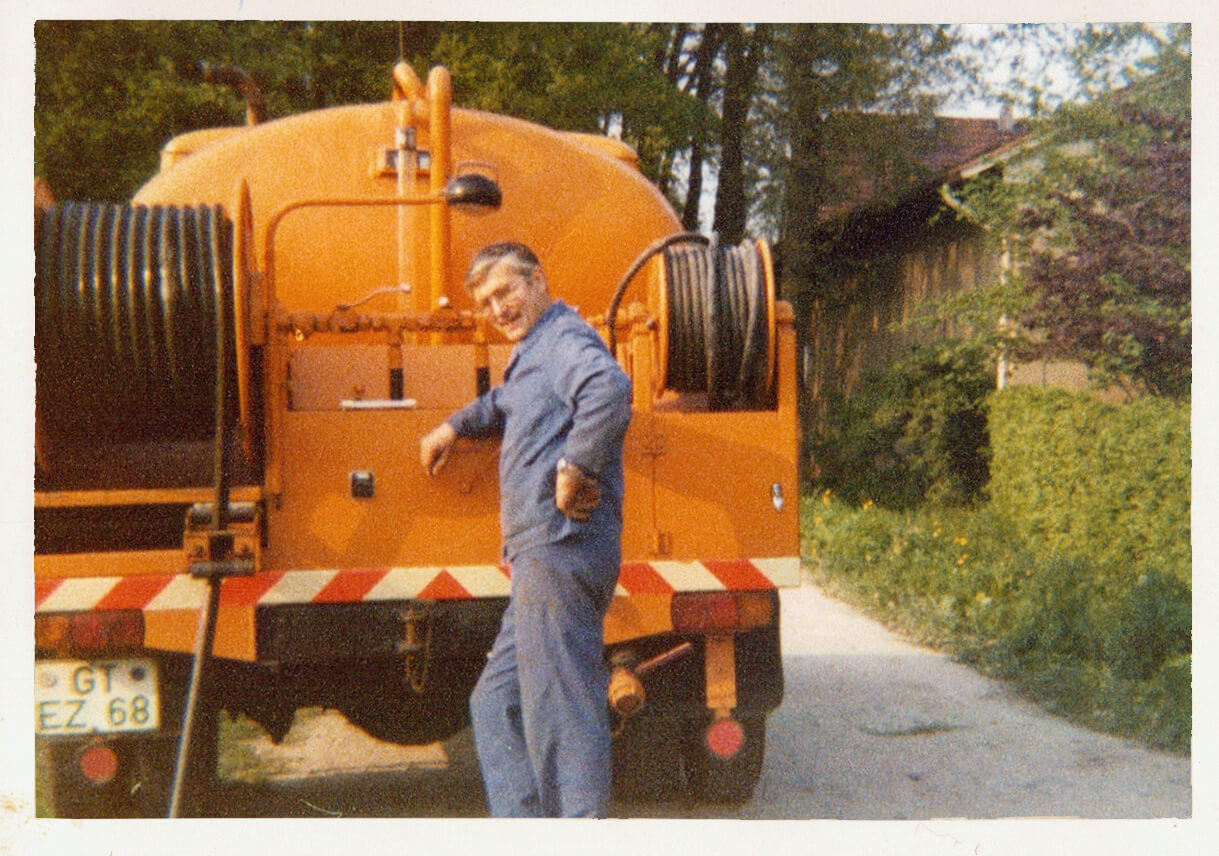
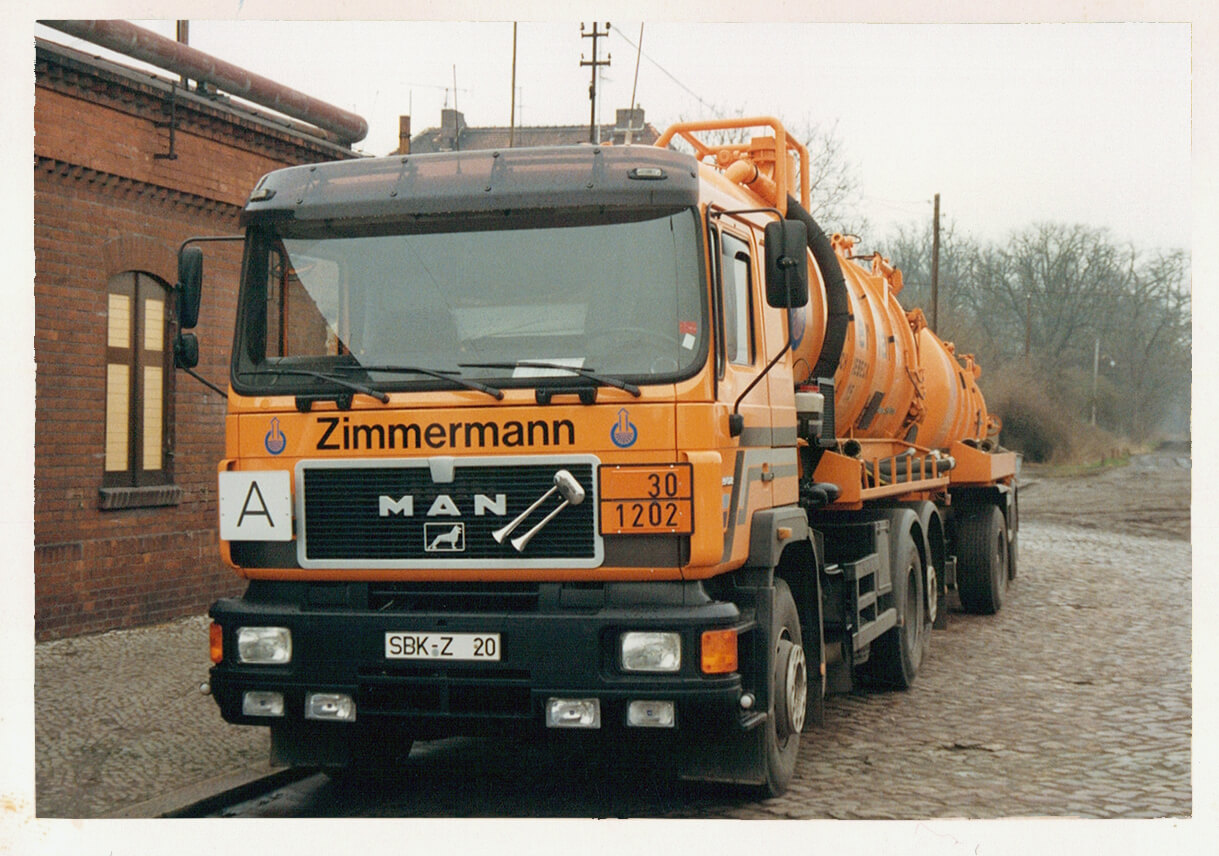
In June 1962, Eberhard and Christa Zimmermann laid the foundation for what is now the ZIMMERMANN Group. They first established a trucking company, to which a construction and fuel trading business was added shortly thereafter. In the mid-1960s, Eberhard Zimmermann began to focus more intensively on waste management and invested in the first vacuum truck and the first high-pressure flushing truck.
Against the backdrop of growing demands regarding waste management, Eberhard and Christa Zimmermann realigned the company’s strategic planning toward waste disposal in 1968. This laid the foundation for the group’s current core business.
"There has to be an easier way."
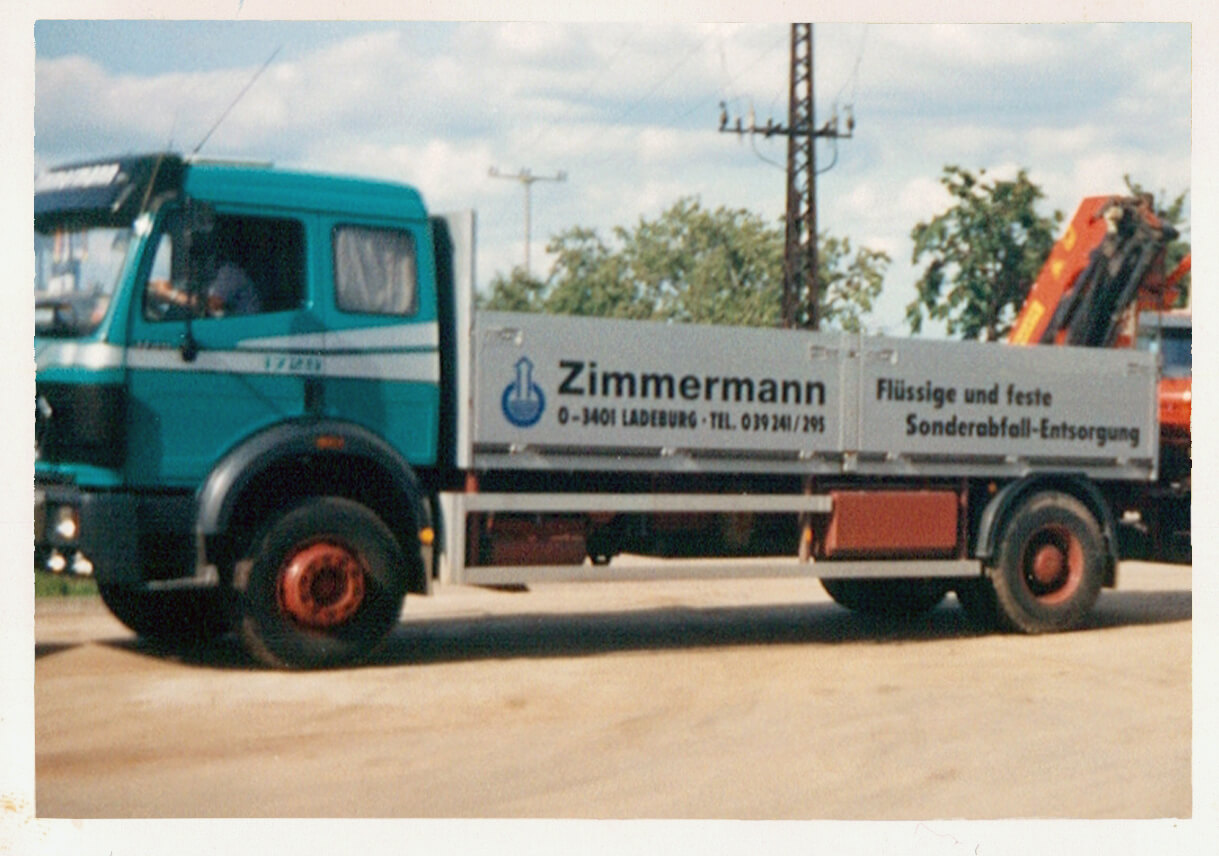
As its customer base grew, treatment found itself facing an increasing need for long-distance and costly transportation of liquid hazardous waste and industrial wastewater. Company founder Eberhard Zimmermann therefore sought a more practical solution.
“There has to be an easier way.” – Eberhard Zimmermann
In the mid-1970s, he conducted his first experiments with a small off-site wastewater treatment plant in northern Germany. The experience gained from these experiments laid the foundation for the company’s further development and led to the construction of its own, larger treatment plant for industrial wastewater.
Since the 1980s, Eberhard Zimmermann GmbH & Co. KG has continued to refine its processes and the technologies it employs. Building on this foundation, the company has increasingly specialized in the treatment treatment and recycling of liquid hazardous waste and special waste.
Responsibility Across Generations
About 35 years after the company was founded, operational management was handed over to the second generation. Eberhard, Gerhard, and Reinhard Zimmermann continued to steer the family business forward. In addition to Eberhard Zimmermann GmbH & Co. KG, other companies were established under the umbrella of the ZIMMERMANN Group.
In the years that followed, treatment capacity was expanded, facilities were built and modernized, and additional sites were developed. This included investments in treatment technology, the vehicle fleet, research, development, and operational infrastructure.
Today, representatives of the second and third generations work together to shape the ZIMMERMANN Group. At ZIMMERMANN, therefore, tradition does not mean standing still, but rather passing on experience, evaluating technical solutions, and ensuring the company’s long-term development.
Our Understanding of Sustainability
At ZIMMERMANN, sustainability is not limited to a single environmental impact. We apply the term to three interconnected areas: environmental, social, and economic responsibility. The following statements describe specific aspects of our operations and corporate characteristics. They do not constitute a blanket statement about the environmental impact of the entire corporate group.
ENVIRONMENTAL RESPONSIBILITY
The ZIMMERMANN Group specializes in the treatment, recycling, and treatment of hazardous and non-hazardous waste. The goal of our work is to properly collect, analyze, and treat waste, and to direct suitable material streams toward recycling or further use, to the extent that this is technically feasible given their properties, legally permissible, and provided for in the respective process.
To this end, the corporate group utilizes, among other things, its own treatment facilities, environmental analysis capabilities, and an accredited testing laboratory. The processes and techniques used are continuously refined in accordance with operational, legal, and technical requirements.
ECONOMIC RESPONSIBILITY
For us, economic responsibility means continuing to develop our group of companies over the long term on a sound foundation. Investments in locations, facilities, our vehicle fleet, research, development, and infrastructure serve to maintain the technical and operational requirements for our services and to expand them as needed.
The joint leadership provided by the second and third generations reflects a corporate perspective that goes beyond short-term decisions. Continuity, professional specialization, and the further development of existing structures form the key foundations for this approach.
SOCIAL RESPONSIBILITY
More than 700 employees from approximately 20 countries work within the ZIMMERMANN Group (as of September 2026). Their experience, qualifications, and perspectives shape the way they collaborate within the companies and at the various locations.
As a family-run group of companies, we focus on long-term collaboration, the transfer of knowledge across generations, and the training and professional development of our employees. Occupational safety and health are essential cornerstones of our business operations.

What Our Tagline Actually Means
Tradition represents the company’s founding in 1962, the family-run growth of the corporate group, and the shared leadership of the second and third generations today.
Sustainable At ZIMMERMANN, sustainability refers to the combination of the three areas described: our core business in waste treatment and treatment, our collaboration with more than 700 employees from around 20 countries, and the long-term economic development of a family-run business.
Our understanding is deliberately limited: The claim is not a general promise of comprehensive or particularly good environmental performance. It describes our origins, our core business activities, and our commitment to integrating environmental, social, and economic responsibility within the framework of our specific business practices.
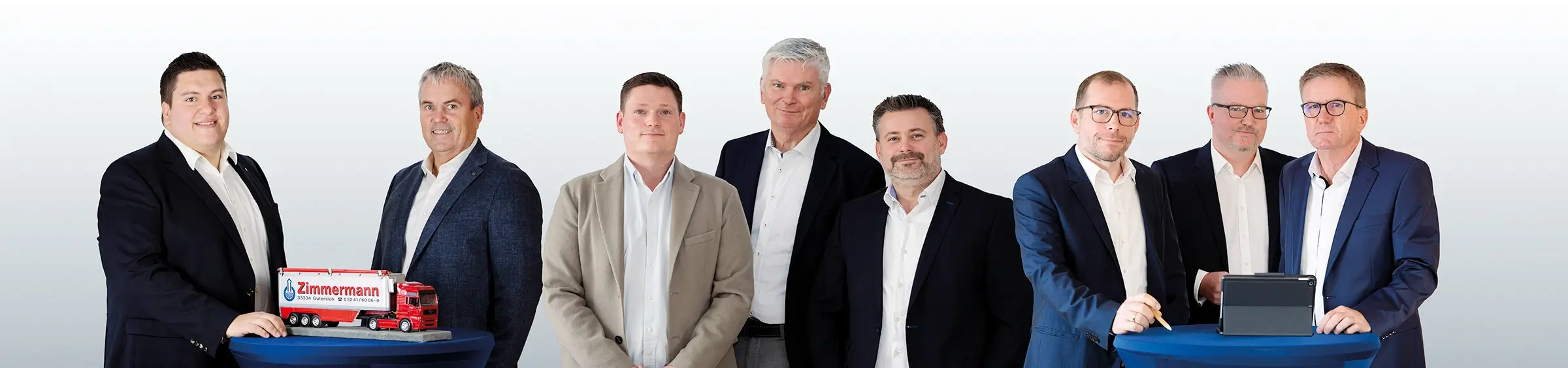
(from left to right) Marvin Zimmermann and Reinhard Zimmermann, David Zimmermann, Gerhard Zimmermann and Benjamin Zimmermann, Marco Zimmermann, Sebastian Zimmermann, and Eberhard Zimmermann Jr.
Topics on the "Sustainable by Tradition" page